
In the immediate aftermath of Labour’s huge victory in the 2024 General Election, new Culture Secretary Lisa Nandy declared that ‘the era of culture wars was over’. This false claim was indicative of the lack of understanding of the culture wars by Labour under Keir Starmer, which led to a spectacularly rapid collapse in support for the government and the announcement of his resignation less than two years later. Yet politicians and the British media still dismiss culture wars as an external imposition that are somehow a distraction from ‘real’ issues such as the ‘cost of living’.
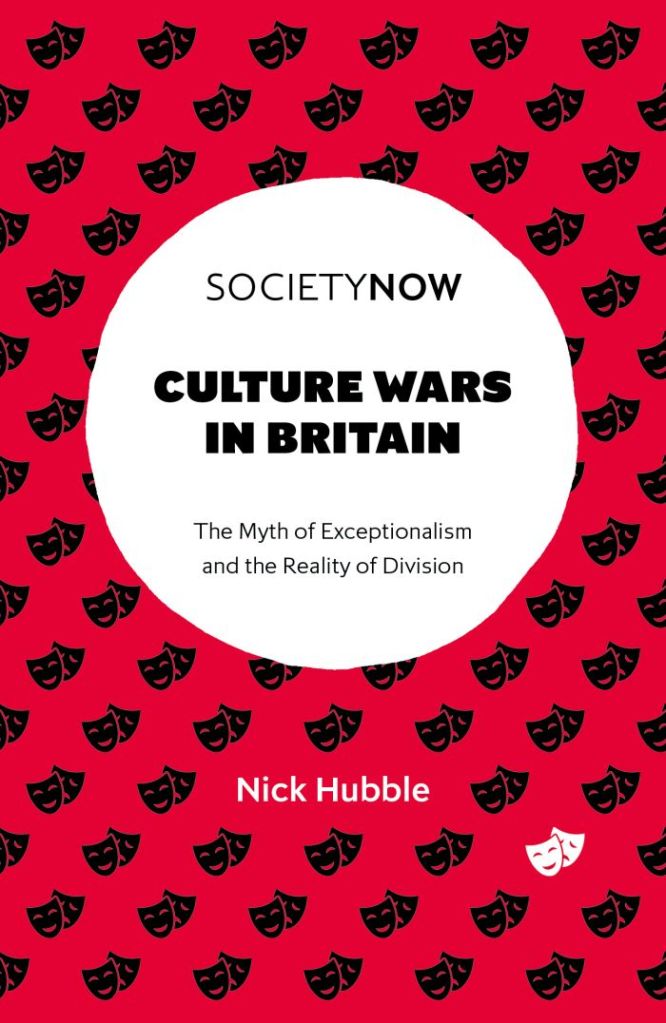
My book Culture Wars in Britain challenges British scepticism towards ‘culture wars’ by showing that they are not a recent American import but date back (at least) until before the First World War to the divisions raised by the issues of votes for women and Home Rule for Ireland, which have continued to shape the UK’s cultural and political divides right up until the present.
Culture wars are now the determining factor of social and political life in Britain. What would have been considered extreme or even unimaginable political events a decade ago, such as the May 2026 local and devolved election results and the forced ousting of a Prime Minister who won a landslide majority only two years ago, are the consequence of Britain being split into two opposing blocs of socially conservative and socially liberal opinion. In order to understand what is happening to the country, it is necessary to understand the British history of the culture wars.
The book begins with a preface, in which I situate myself and explain my motivations for writing the book. This is followed by six chapters:
Ch 1, ‘What are Culture Wars?’, explains what culture wars are – outlining the main theories and academic literature – and describes the main differences between culture wars in the UK and the US, before analysing how this gap has narrowed since Brexit and converged further following the re-election of Trump. In his Inaugural Address, Trump declared that it will henceforth be the policy of the US Government that there are only two genders, male and female. Three months later, the UK Supreme Court ruled in April 2025 that definitions of ‘man’ and ‘woman’ referred to biological sex.
Ch 2, ‘Culture, War, Class and Gender’, discusses the historical relationship between gender, class, the nation state and culture wars. I look at the history of the women’s movement between 1910 and 1940 and the authoritarian reflexes it triggered. In particular, I examine the 1910 constitutional crisis, which led to the Parliament Act and the third Irish Home Rule Bill, and argue that this constitutional change effectively changed subjectivity by ending the Victorian traditional order and enabling people in Britain to become citizens rather than subjects. As George Dangerfield’s The Strange Death of Liberal England (1935) explained, the Victorian ‘Perfect Wife’ had been a ‘biological female’ who was ‘ready to be browbeaten and put upon so long as her husband remains unconsciously dependent upon her in his dual role of master and child’. Following 1910, however, human character was changed from such biological essentialism.
Ch 3, ‘The Break-Up of Normative Britain’, describes how postwar Britain, characterised by monarchy, class system and a binary gender divide was held together by normative values associated with an imaginary common culture (the historian Eric Hobsawm defined a ‘common proletarian way of life’, which he described as undermined by women going out to work), and how this fantasy broke down. I argue that the British working class was not predominantly socially conservative and that it was demand from ‘below’ that drove the comprehensive school movement and the expansion of higher education. I also discuss how from the 1960s onwards, the trajectory of nationalism in Scotland and Wales became driven by a desire to break away from the conservative common culture of postwar Britain. In contrast, Thatcher sought to appeal in part to a nostalgia for the common proletarian life and effectively fought a culture war over the restoration of traditional Victorian values. The second part of her famous claim that ‘there’s no such thing as society, only individual men and women’ resonates both with that Victorian idea of the biological female and the Supreme Court ruling of April 2025 and the anti-trans policies of the present period.
Ch 4, ‘The Brexit Divide’, shows how the rise of English nationalism drove the vote to leave the EU and has created a permanent schism between socially conservative authoritarian nationalism and socially liberal cultural progressives, which has led to the breakdown of the old two-party politics. I also discuss research on how Brexit has led to ‘new feeling rules’ that make people more reluctant to discuss such issues because of the emotional hurt from falling out with friends and family members.
Ch 5, ‘The Culture Wars in the 2020s’, explains why the 2020s have become a critical moment in British history. I identify four key contexts: Brexit (and decline of two-party politics), Covid, the death of the Queen, and the ‘small boats’ panic. I also discuss how the BLM movement in 2020 led to mainstream media and politicians adopting what has been called ‘anti identity politics’. I assess the real risk that Britain moves towards an authoritarian nationalism of the type that characterises Putin’s Russia and Trump’s America. I discuss in detail the role of English nationalism in the anti-asylum seeker protests outside hotels and the anti-trans movement (from Mumsnet to the Cass report) – phenomena which are linked by the nationalist mantra of ‘protecting our women and girls’.
Ch 6, ‘The Future of the Culture Wars’, argues that we need to abandon the wishful thinking that divided people can make common cause within the current framework of Britain. Rather, we need to learn to live with culture-war divides concerning, for example, gender and migration. We need to stop being sceptical about culture wars and think about new cultural patterns of living beyond the traditional nation state and authoritarian nationalism, which make space for difference.
Subsequent posts will include additional material from the project and show how I am taking it forward by investigating alternative cultural patterns of living.

