
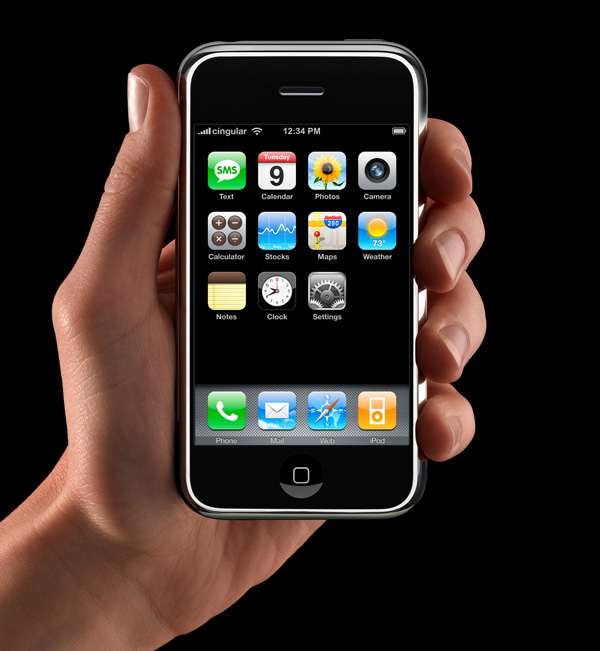
I’ve seen the ‘iPhone argument’ argument – that the launch of the first iPhone in 2007 is the point in time when everything started to go ‘wrong’ – once too often over recent months. This particular version in relation to British prime ministers has been on the radio and on Facebook etc as well as in this FT article:
One ally [of Keir Starmer] said: “There have been seven prime ministers since the iPhone was invented and seven in the 42 years before that. Everywhere around the world there are unpopular incumbents but of course we want to do things that are popular. That’s why 2026 will be the year when renewal becomes a reality.” – ‘There’s a real dislike, even loathing’: why voters hate Starmer and Reeves, Financial Times, 31 December 2025.
The argument being made here – that social media is to blame for the short-term swings of public opinion but that Labour can restore stability in 2026 – is obviously nonsense but, at the same time, it’s also a good example of how the iPhone argument is deployed.
There are some obvious factual objections to this argument. First, between 1955 and 1964, there were five prime ministers (Churchill, Eden, Macmillan, Douglas-Home, Wilson), so rapid turnover is not an unprecedented historical phenomenon. Second, if we wanted to make 2007 the significant point in modern history, it would make more sense to refer to the beginning of the global financial crisis rather than the launch of the iPhone. Third, the current instability and rapid turnover in British politics owes a lot to 2016’s Brexit.
While social media has exacerbated some of these tendencies, it’s not clear that this is always due to the smart phone. Many political changes have arguably been driven by older voters. While targeted Facebook advertising and closed groups plays a role, this might be accessed through PCs or laptops. In other words, the iPhone argument is being deployed in this instance as a distraction. The short-term intent of the above quote is to distract us from how unpopular the current Labour government is for long enough to make the preposterous claim that all this will change in 2026. It won’t.
The deeper intention is to distract from a wider dissatisfaction with the UK political system, which dates back long before the current century. For example, the last UK General Election to attract a turnout of over 70% was in 1997 and even then, nearly a million people voted for UKIP or the Referendum Party. The old two-party system has since collapsed. In 2024, the turnout was under 60% and the combined vote of the Tories and Labour was only 3 million more than Labour alone attracted in 1997. This paradigm shift has nothing to do with smart phones and social media. It’s a product of changed cultural consciousness since the 1960s (and earlier). People of my generation and younger, who grew up seeing in colour, are not going to be content with a black-and-white binary political system. There’s no way back to that postwar British system.
The attempt to attribute wider cultural change to post-2007 smart phones is always an attempt to pretend that deep-lying long-term social and cultural processes are merely short-term tendencies that can be easily reversed. The people behind this argument know full well that this isn’t the case but they push it because they want to influence not only public opinion but also sections of the establishment, such as the leadership of the Labour party and the senior management of the BBC. The aim is to prepare the ground for reactionary and authoritarian legislation.
AFAIK, the ‘iPhone argument’ originates with – or at least was massively popularised by – Greg Lukianoff and Jonathan Haidt’s 2018 book, The Coddling of the American Mind where it is used to other Gen Z (12/-)
Lukianoff and Haidt more-or-less argue that cancel culture, safe spaces, gender pronouns etc were all created overnight due to the pernicious effects of the smart phone and social media. They see it, in effect, as a generational mental illness. In my own experience, though, concerns about the content of books and films in teaching long predates this period, I certainly had discussions with students about such concerns over the course of my teaching career from the late 1990s onwards (which were always reasonable and resolvable by mutual agreement). I think such concerns reflected changing social and cultural values. By the 1990s, some elements of postwar everyday culture were no longer considered acceptable because they were damaging. Instead of societies in which people kept their personal opinions to themselves, we moved in the UK, US and other countries, to societies in which values were publicly contested. The iPhone and social media are part of that story, but they are not the cause.
The changes working through society are not the ephemeral consequences of post-2007 smart phones but the product of deeper, longer processes that are going to have to be worked through. There’s no quick reset to some mythological pre-2007 period of everything being wonderful.

